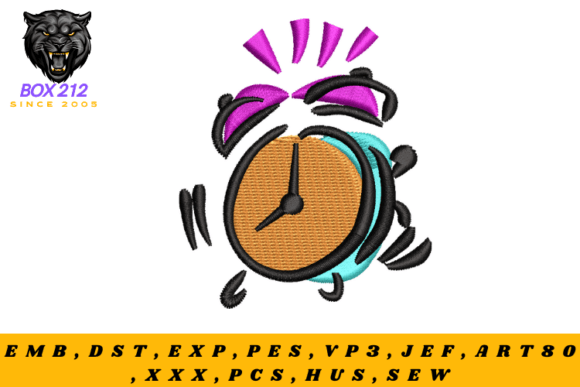
Alarm Clock Digital Embroidery Review
As an embroidery designer who has spent years refining files for small businesses, I know that a successful design is more than just a pretty picture. It needs to hold up under the needle, survive the wash cycle, and communicate brand value instantly. When I first reviewed Alarm Clock Digital Embroidery, my immediate thought was not about home decor, but about commercial application. The description highlights a "playful and detailed motif" with a "nostalgic and functional touch." For a business owner, those keywords signal versatility. This isn't just a kitchen accessory; it is a versatile asset for branding, merchandise, and customer engagement.
First Impressions: Personality and Professionalism
The visual personality of Alarm Clock Digital Embroidery strikes a balance between retro charm and modern utility. In the world of brand identity, nostalgia is a powerful tool. A classic alarm clock evokes reliability, punctuality, and attention to detail—traits every business wants to project. Whether you are running a boutique coffee shop, a handmade jewelry studio, or a local bakery, this design adds a layer of warmth that sterile logos often lack.
From a design perspective, the "detailed" aspect mentioned in the product description is both a strength and a challenge. It suggests that the file contains enough nuance to look premium rather than generic. However, as designers, we must ask: does the detail translate well at small scales? A playful motif works beautifully on larger items like tote bags or aprons, where customers can appreciate the nuance. On smaller items, such as cap fronts or chest logo accents, the clarity becomes paramount. If the details are too fine, they may blur together, losing the "classic" feel and appearing muddy. Therefore, the first step in evaluating Alarm Clock Digital Embroidery is assessing its scalability.
Real-World Business Applications
For small business owners and Etsy sellers, the ability to create cohesive merchandise is key to building a loyal customer base. Here is how Alarm Clock Digital Embroidery can be integrated into various commercial projects:
- Embroidered Patches: One of the most popular uses for this type of design is creating iron-on or sew-on patches. These serve as excellent add-ons for denim jackets, backpacks, or beanies. The nostalgic theme appeals to a wide demographic, making these patches highly marketable as standalone products.
- Staff Uniforms and Aprons: Imagine a café or bakery using this design on high-quality canvas aprons. It reinforces the brand's commitment to time management and quality service. It feels personal and handmade, which increases perceived value compared to printed cotton aprons.
- Cap Embroidery: Placing this design on the front or side of a structured cap can create a trendy streetwear vibe. The contrast of a vintage-style clock against modern cap materials creates a visually striking juxtaposition that stands out in social media feeds.
- Tote Bag Design: Canvas totes are ubiquitous in the handmade market. A centrally placed or pocket-placed Alarm Clock Digital Embroidery adds a tactile element that prints cannot replicate. Customers love the texture and durability of embroidery, viewing it as a sign of a higher-quality product.
- Product Packaging Accents: Small businesses often use branded tags or labels. A tiny embroidered patch featuring this clock motif can be attached to product packaging, adding a premium unboxing experience that encourages repeat purchases.
Strategic Considerations and Limitations
While the potential is high, there are specific scenarios where Alarm Clock Digital Embroidery requires careful handling. As a professional, I advise clients to avoid placing intricate designs on highly curved surfaces without proper digitizing adjustments. For instance, embroidering directly onto the curved front of a baseball cap can cause distortion if the fabric stretches during stitching.
Additionally, consider the stitch density. If the design includes thin outlines or very small text elements (such as numbers or brand names), these may become illegible when stitched at a small size, such as 2 inches wide. Fine lines can merge, resulting in a loss of definition. To mitigate this, test the design on the actual fabric type before committing to bulk production. Textured fabrics, like heavy wool or loose-weave linen, can swallow up fine details, so a smoother fabric is preferable for maintaining crisp edges.
Another critical factor is thread color contrast. On dark uniforms or dark-colored totes, light-colored threads may require a backing stabilizer to prevent show-through or a dense underlay to ensure opacity. Always evaluate how the thread colors interact with your brand palette. If your brand uses muted tones, ensure the clock motif still pops and doesn't get lost in the background fabric.
Impact on Brand Identity and Customer Trust
In the digital age, physical touchpoints are rare and valuable. Every embroidered item serves as a tangible reminder of your brand. Using Alarm Clock Digital Embroidery on merchandise signals that you care about craftsmanship. It suggests that your business values precision (symbolized by the clock) and aesthetics (symbolized by the design). This alignment enhances customer trust and recognition. When customers see your logo or motif on a high-quality embroidered item, they perceive your entire brand as more professional and established.
Furthermore, handmade presentation matters. Handmade brands thrive on authenticity. An embroidered design, unlike a screen print, has depth and texture. It tells a story of labor and care. By incorporating this design into your small business merch, you are not just selling a product; you are selling an experience. This emotional connection drives buyer engagement and fosters community loyalty.
Practical Designer Notes for Production
Before integrating Alarm Clock Digital Embroidery into your commercial workflow, follow these essential steps to ensure a flawless finished product:
- Test in Black and White: Convert the design to monochrome to check the balance of negative space and stitch coverage. This helps identify areas that might be too crowded or too sparse.
- Check Small Patch Size: Simulate the design at its smallest intended size. Can you still distinguish the clock face? Are the hands clear? If not, simplify the digitizing or increase the minimum size.
- Review Thread Color Contrast: Ensure there is sufficient contrast between the thread and the fabric. Low contrast can make the design disappear, especially in dim lighting.
- Inspect Spacing and Hoop Size: Confirm that the hoop size accommodates the final placement area. Tight spacing can lead to puckering or misalignment.
- Test on Real Fabric: Never rely solely on digital mockups. Stitch the design on the actual fabric you plan to use. Different materials react differently to tension and stabilizers.
- Use Proper Stabilizer: Select the correct stabilizer (cut-away, tear-away, or water-soluble) based on the fabric weight and stretch. This prevents distortion and ensures longevity.
- Create a Printable Mockup: Use a high-quality printable mockup to visualize the design on your product before production. This is crucial for client approval and marketing materials.
- Compare Design Assets: Place this design beside other elements of your brand kit. Does it complement your existing logos and patterns? Visual consistency is key to a cohesive brand image.
- Confirm Commercial Licensing: Before selling any products featuring this design, verify the commercial licensing terms. Ensure you have the right to use the digital embroidery file for resale purposes to avoid legal issues.
By treating Alarm Clock Digital Embroidery as a strategic business asset rather than just a decorative element, you can elevate your brand presence and create merchandise that resonates with customers. With careful planning and execution, this design can become a signature part of your custom apparel and design assets library, driving growth and recognition for your small business.